


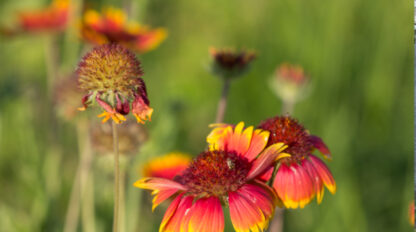
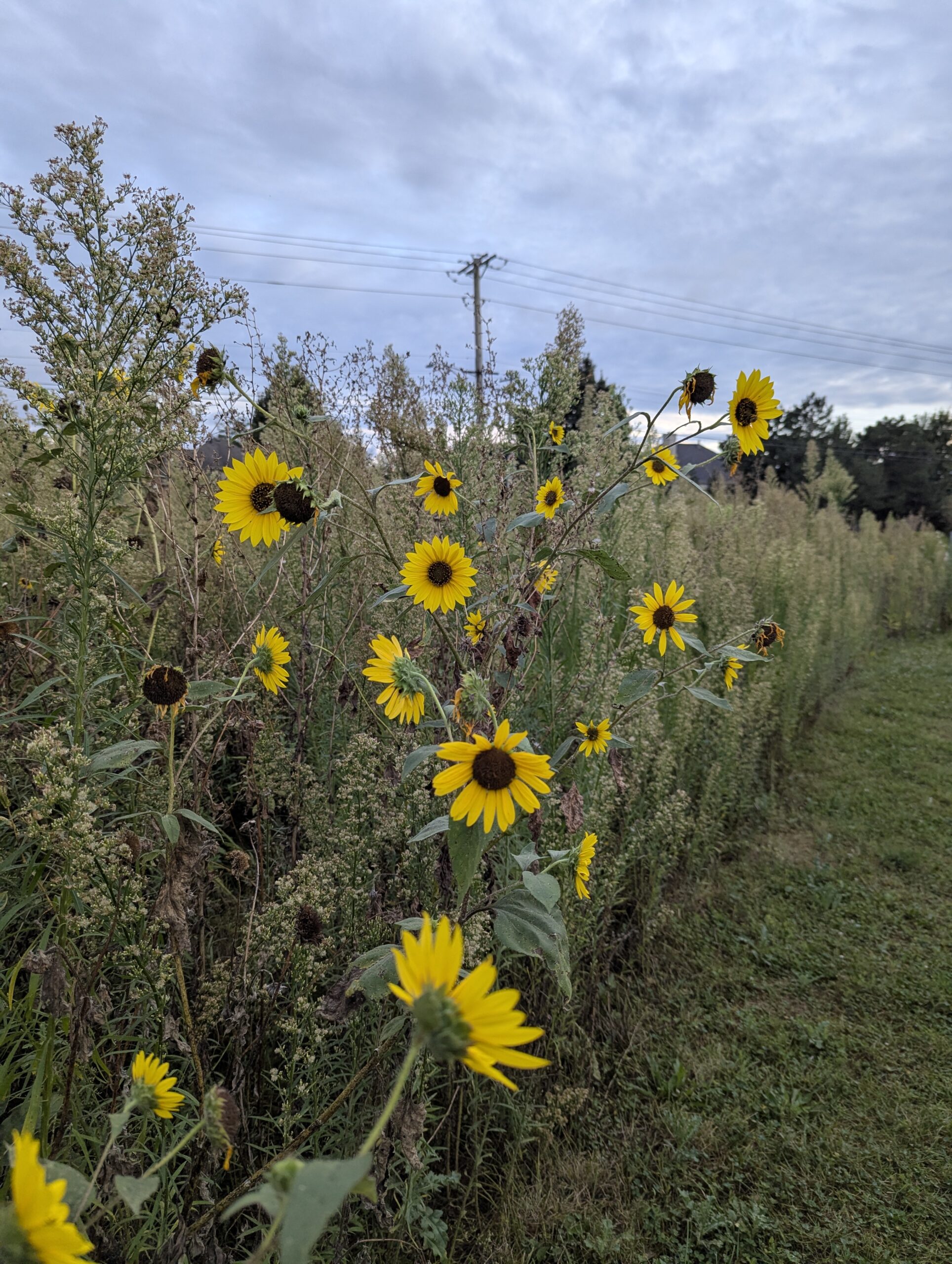
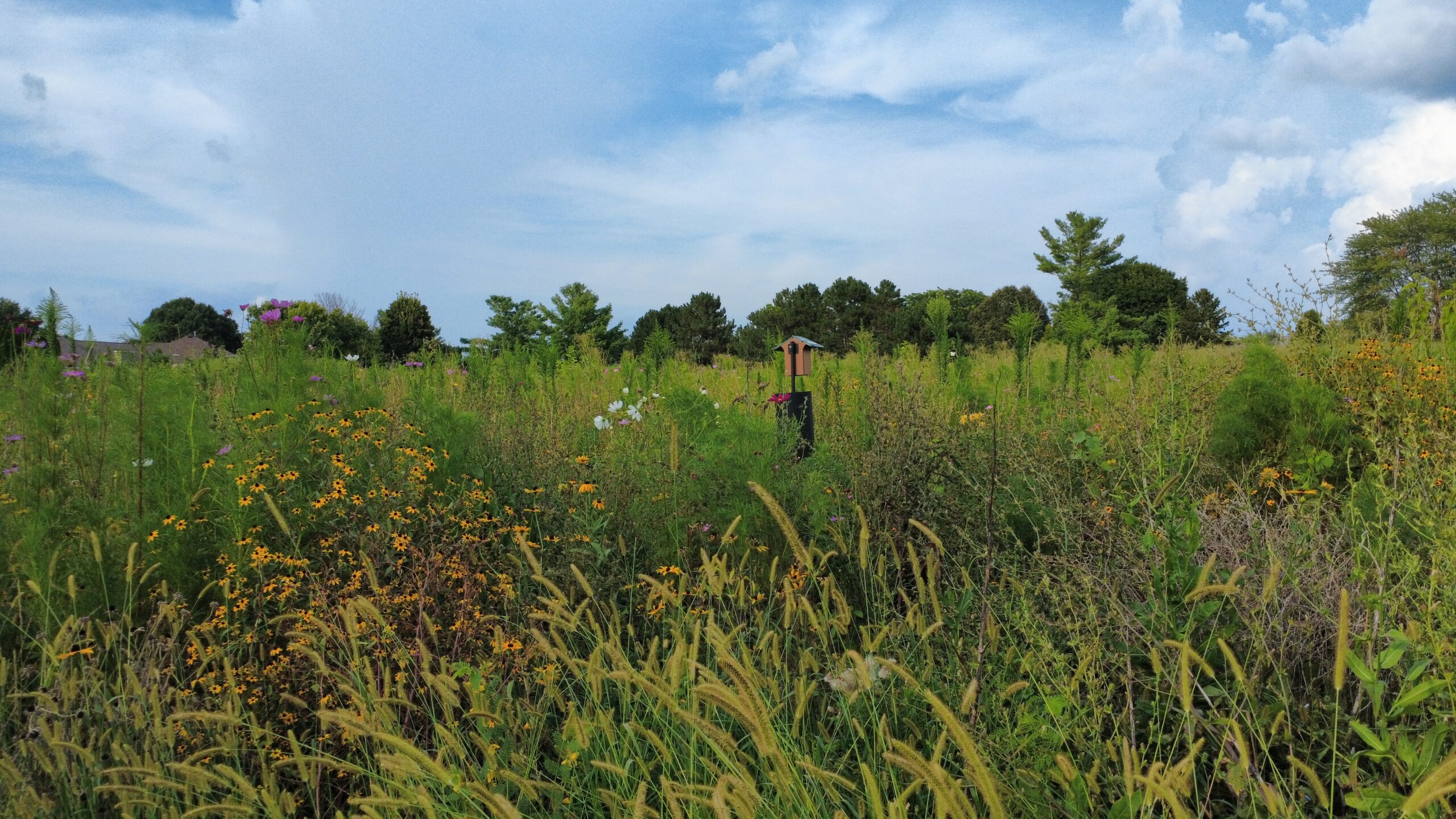
In 2023, First Baptist Church began a process of converting 5.4 acres of unused land to native prairie grasses and wildflowers. This project seeks to promote the health of essential pollinators and wildlife while creating a beautiful landscape for our community to enjoy. By planting a lower-maintenance field, we can direct more resources to needs in our church and community.
Trails have been mown into the field, inviting visitors to take their time and wander through the field to notice how the sounds of the city fade as birdsong and the noise of insects fills the area. Benches provide a place to stop and rest and watch. Birdhouses for bluebirds and purple martins provide nesting sites.
Periodic controlled burns will be needed to prevent the encroachment of non-native grasses and plants, as the city does with prairie restoration areas such as Tipton Park. These burns will be conducted with consideration to wind direction for our neighbors, and according to all legal requirements and best practices.
(links to plants are from the Illinois Department of Natural Resources Biodiversity Search and the Lady Bird Johnson Wildflower Center Database)
